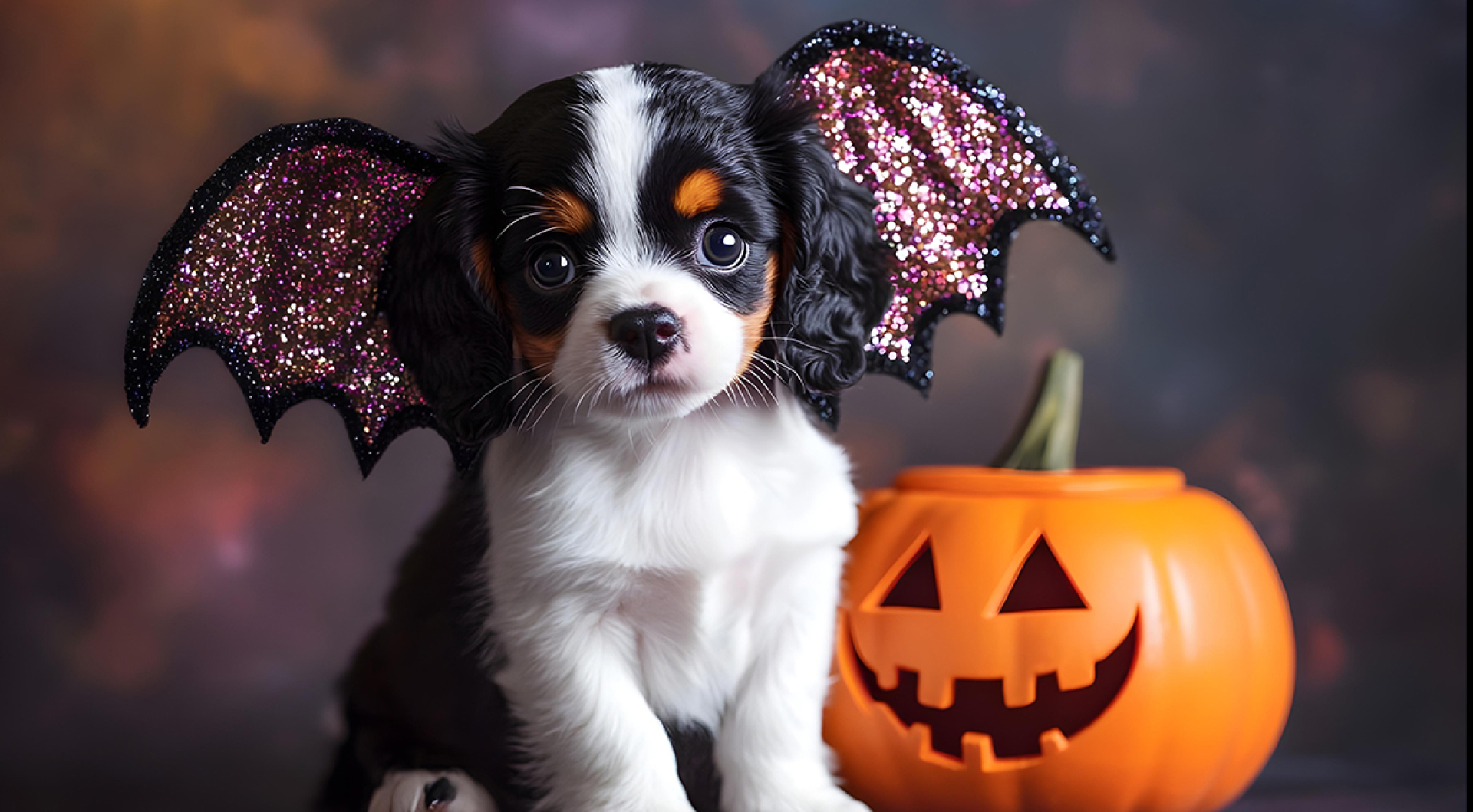
Understanding Halloween from Your Puppy's Perspective
Before diving into specific safety tips, it's important to consider how Halloween appears from your puppy's point of view:
- Strange-looking visitors arrive repeatedly at your door
- Unfamiliar sounds and unusual costumes disrupt normal routines
- Exciting decorations may look like new toys
- Enticing food smells are everywhere but off-limits
- Normal walking routines might include strange sights and sounds
- Household energy and excitement levels may be higher than usual
For a puppy, especially one under 6 months of age, these changes can be overwhelming. Their natural curiosity combined with limited life experience makes them particularly vulnerable during festive seasons like Halloween.
Doorbell Distress: Managing Trick-or-Treaters
One of the biggest challenges during Halloween is managing your puppy's reaction to the constant stream of visitors.
Signs of Doorbell Anxiety in Puppies
Watch for these indicators that your puppy is experiencing stress from frequent visitors:
- Excessive barking or whining
- Pacing or restlessness
- Hiding behavior
- Panting when it's not hot
- Destructive behaviors like chewing
- Accidents despite being housetrained
- Trembling or cowering
Practical Solutions for Doorbell Management
- Create a safe room or area away from the front door where your puppy can relax with favorite toys and comfortable bedding.
- Use white noise machines or calm music to mask doorbell sounds and outdoor commotion.
- Consider disconnecting the doorbell for the evening and placing a sign directing trick-or-treaters to knock gently instead.
- Practice doorbell desensitization in the weeks leading up to Halloween by having family members ring the bell and immediately rewarding your puppy for calm behavior.
- Station a family member with treats near your puppy's safe space to provide positive associations during the evening.
- Try a Thunder Shirt or anxiety wrap which provides gentle, constant pressure that many puppies find calming.
- For highly social puppies, consider having them greet trick-or-treaters from behind a baby gate where they can see visitors but not escape.
For more on socializing your puppy, check out our blog post on the subject!
Candy Concerns: Protecting Your Puppy from Toxic Treats
Halloween candy poses one of the most serious health risks to puppies during the season. Many common treats contain ingredients that range from mildly upsetting to potentially fatal for dogs.
Most Dangerous Halloween Treats for Puppies
- Chocolate: Contains theobromine and caffeine, which can cause vomiting, diarrhea, rapid breathing, increased heart rate, seizures, and in severe cases, death.
- Xylitol: Found in sugar-free candies and gum, this artificial sweetener can cause rapid insulin release, leading to hypoglycemia, seizures, liver failure, and even death.
- Raisins: Sometimes found in Halloween trail mixes or homemade treats, raisins can cause kidney failure in dogs.
- Hard candies and lollipops: Present choking hazards and can cause intestinal blockages if swallowed.
- Candy wrappers: Can cause intestinal blockages requiring surgical intervention.
Preventative Measures for Candy Safety
- Store all Halloween candy in sealed containers placed in high cabinets or areas your puppy cannot access.
- Train children to keep their collected candy secure and out of the puppy's reach.
- Create a family rule that candy checking and sorting happens at the kitchen table or another puppy-free zone.
- Empty trick-or-treat bags immediately upon returning home rather than leaving them unattended.
- Consider offering pet-safe treats to your puppy while humans enjoy their Halloween candy to reduce begging behavior.
- Know the symptoms of chocolate poisoning: vomiting, diarrhea, restlessness, increased urination, tremors, elevated heart rate, and seizures.
- Have your veterinarian's emergency number and the nearest 24-hour animal hospital information readily available.
For more on human food and puppies, check out our blog post about 10 common foods that could harm your dog.
Costume Considerations: Dressing Up Safely
While costumed puppies are adorably photogenic, not all puppies enjoy wearing outfits, and some costume elements can pose safety risks.
Evaluating Your Puppy's Costume Tolerance
Before purchasing a costume, consider whether your puppy is likely to enjoy the experience by assessing:
- How they react to wearing a collar or harness
- Their response to being handled or groomed
- General temperament and anxiety level
- Previous experiences with clothing (like rain jackets)
- Age and maturity level
Dog Costume Safety Guidelines
If you decide to dress up your puppy, follow these important safety rules:
- Choose breathable fabrics that won't cause overheating.
- Avoid costumes with small, dangling, or easily chewed parts that could become choking hazards.
- Ensure the costume doesn't restrict movement, vision, hearing, breathing, or the ability to bark.
- Check for proper fit - too tight can cause circulation problems; too loose can cause tripping or entanglement.
- Supervise your costumed puppy at all times and remove the outfit immediately if they show signs of distress.
- Do a dress rehearsal before Halloween to allow your puppy to become accustomed to the costume.
- Consider alternatives to full costumes like festive bandanas, collars, or bows that are less restrictive.
Signs Your Puppy Dislikes Their Costume
Remove the costume immediately if your puppy:
- Freezes or refuses to move
- Tries to remove the costume by scratching, biting, or rolling
- Tucks their tail or flattens their ears
- Shows whale eye (when you can see the whites of their eyes)
- Pants excessively when not hot or active
- Whines, growls, or shows other signs of distress
Decoration Dangers: Creating a Puppy-Proof Halloween Home
Halloween decorations can transform your home into a festive space—but many common decorative elements pose risks to curious puppies.
High-Risk Decorations for Puppies
- String lights and electrical cords: Risk of electric shock if chewed
- Candles: Fire hazards and burn risks
- Fake spider webs: Entanglement and ingestion hazards
- Small decorative items: Choking risks
- Carved pumpkins with candles: Fire and burn risks
- Glow sticks: The liquid inside is mildly toxic and causes irritation
- Decorative corn and artificial autumn plants: Potential intestinal blockage
Creating a Puppy-Safe Festive Environment
- Place decorations high on mantels, shelves, or tables beyond your puppy's reach.
- Use battery-operated flameless candles instead of traditional candles, especially in jack-o'-lanterns.
- Secure electrical cords with cord covers or temporary mounting solutions that keep them off the floor.
- Consider limiting decorations to puppy-free rooms of your home.
- Supervise your puppy when they're in decorated areas, especially during their first exposure to new items.
- Create physical barriers like baby gates to keep puppies away from elaborate decoration displays.
- Choose pet-friendly alternatives like fabric decorations instead of plastic or edible items.
Managing Puppy Stress and Anxiety During Halloween
Many puppies experience stress during Halloween due to disrupted routines and increased stimulation. Minimizing puppy anxiety halloween concerns is essential for their well-being.
Preparing Your Puppy in Advance
Start preparing your puppy for Halloween several weeks in advance:
- Gradually introduce Halloween-related stimuli like decorations and costumes.
- Practice basic obedience commands that will be useful during the excitement, such as "stay," "leave it," and "go to place."
- Create positive associations with Halloween items by pairing them with treats and praise.
- Adjust walking schedules gradually if you'll need to change them on Halloween night.
- Introduce anxiety management tools like calming music or anxiety wraps before they're needed.
Day-of Stress Management Techniques
On Halloween itself, help manage your puppy's stress with these trick or treat safety dogs strategies:
- Exercise your puppy thoroughly earlier in the day to promote relaxation in the evening.
- Maintain as much of their regular routine as possible, including meal times and short training sessions.
- Create a quiet sanctuary in a room away from the front door and main activity areas.
- Use calming aids such as:
- Pheromone diffusers or collars
- Anxiety wraps or vests
- Classical music or white noise
- Familiar-smelling bedding and toys
- Consider natural calming supplements approved by your veterinarian.
- Provide long-lasting chew toys or puzzle feeders to keep them occupied.
- Take short, supervised bathroom breaks in a secure area away from trick-or-treaters.
Walking Safety on Halloween Night
If you must walk your puppy on Halloween evening, special precautions are necessary to ensure their safety amid the unusual activities and costumes.
Halloween Walk Safety Tips
- Use reflective gear on both you and your puppy to increase visibility.
- Keep your puppy on a short, secure leash rather than a retractable leash for better control.
- Consider walking earlier in the day before festivities begin.
- Avoid peak trick-or-treating hours when possible.
- Stay in familiar, well-lit areas where your puppy feels comfortable.
- Be prepared for unexpected encounters with people in costumes that might startle your puppy.
- Bring high-value treats to create positive associations or distract from frightening stimuli.
- Have an escape route planned if your puppy becomes overwhelmed.
Special Considerations for Young Puppies
Puppies under six months of age may need extra protection during Halloween festivities.
Additional Precautions for Very Young Puppies
- Limit exposure to trick-or-treaters if your puppy isn't fully vaccinated.
- Be mindful of developmental fear periods that commonly occur around 8-10 weeks and again at 6-14 months, when negative experiences can have lasting impacts.
- Watch for signs of overstimulation like frantic behavior, inability to settle, or excessive mouthing.
- Provide more frequent bathroom breaks as excitement and stress can affect bladder control.
- Consider postponing puppy socialization to Halloween events until they're older and more confident.
Frequently Asked Questions About Puppy Halloween Safety
-
Is it cruel to put a costume on my puppy?
It depends entirely on your individual puppy's temperament and comfort level. Many puppies tolerate simple costumes without distress, while others find the experience stressful. Always prioritize your puppy's comfort over photo opportunities, and have alternatives like festive bandanas or collar decorations ready if your puppy shows signs of discomfort.
-
How can I tell if my puppy is stressed during Halloween activities?
Watch for signs of puppy stress management needs like panting when not hot, hiding, trembling, excessive vocalization, refusing treats, pacing, destructive behavior, or house-training accidents. These indicate your puppy may be overwhelmed and need a quieter environment.
-
What should I do if my puppy ingests Halloween candy?
Contact your veterinarian or emergency animal hospital immediately. If possible, determine what and how much they ate. For chocolate ingestion, you can use online toxicity calculators to assess risk based on your puppy's weight and the type of chocolate, but veterinary guidance is always recommended regardless of the calculation results.
-
Can I take my puppy to a Halloween parade or event?
This depends on your puppy's age, vaccination status, temperament, and previous exposure to crowds. For many puppies, especially those under 6 months, these events can be overwhelming and potentially create negative associations with new experiences. Consider your puppy's specific needs and consult with your veterinarian before attending large events.
-
How can I help my puppy adjust back to normal after Halloween?
Return to your regular schedule as quickly as possible, including consistent feeding times, walks, play sessions, and training. Remove Halloween decorations gradually rather than all at once, and continue providing a quiet space if your puppy seems unsettled. Patience and consistency will help your puppy understand that the unusual activities were temporary.
Conclusion
Halloween can be a fun season to share with your puppy when approached with proper preparation and precautions. By understanding the holiday from your puppy's perspective and implementing these safety measures, you can create positive experiences while protecting them from seasonal hazards.
Most importantly, recognize that sometimes the best way to celebrate with a very young or sensitive puppy is to keep them comfortably away from the excitement. There will be many Halloweens in your future together, and building a foundation of trust and security now will make future celebrations more enjoyable for everyone. Contact us today if we can help you connect with a new puppy!